N95 masks for haze: how to choose one and wear it
Updated 2 min read
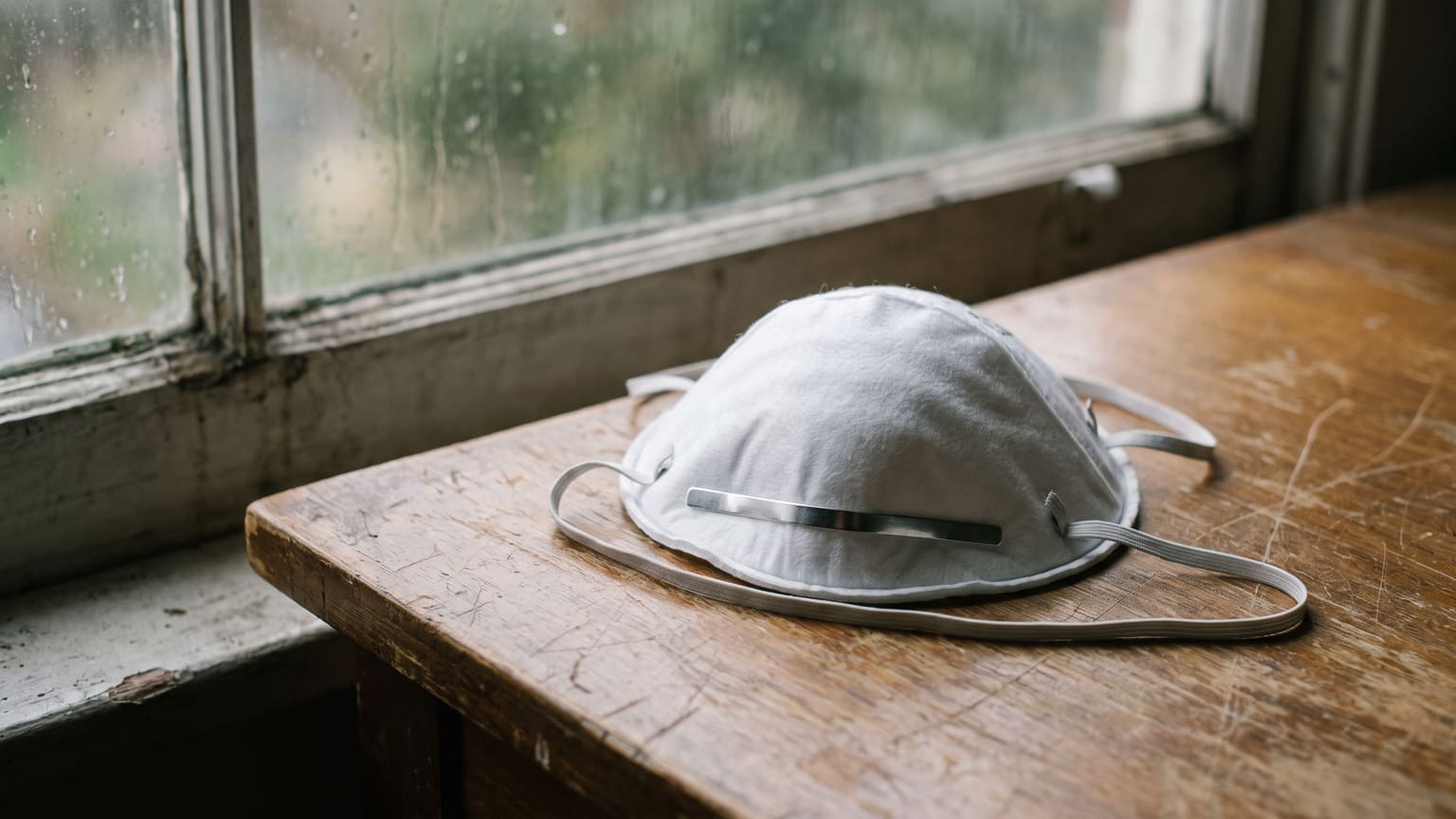
In haze, most of the masks already in your house do not protect you. The difference is not price or brand. It is what the mask filters, and how well it seals to your face.
What an N95 actually does
An N95 filters at least 95 per cent of particles at 0.3 microns. That size is the benchmark because it is the hardest to catch; both larger and smaller particles are trapped more easily. PM2.5, the pollutant that dominates haze, sits well inside the range it handles.
| Type | Against PM2.5 | Why |
|---|---|---|
| N95 / KN95 / FFP2 | Effective | Filters fine particles and is built to seal. |
| Surgical mask | Weak | Designed for droplets; open at the sides. |
| Cloth mask | Almost none | The weave is far too open for fine particles. |
Fit matters more than the filter
Air takes the easiest path. If there is a gap beside your nose or along your cheeks, air goes through the gap instead of the filter, and the N95 rating stops meaning anything. Press the nose clip to the shape of your nose, then breathe out gently: if your glasses fog, it is leaking.
- A beard breaks the seal. There is no way around this except shaving where the mask sits.
- Children need a child size. An adult N95 will not seal on a small face and gives far less protection than it appears to.
- Valved masks are fine for haze. The valve only releases the air you breathe out and does nothing to the air you draw in.
- Replace it when breathing through it gets hard, when it gets wet, or when it is visibly dirty. There is no fixed expiry.
A mask is a last resort, not a plan. Being indoors with the windows shut protects you considerably better than the best mask does.
When to bother
Above API 100, wear one if you will be outside for any length of time. Above 200, avoid going out at all; if you must, a well-fitted N95 is the minimum rather than an option.