Malaysia's haze history: 1997, 2005, 2013, 2015, 2019 and 2026
Updated 4 min read
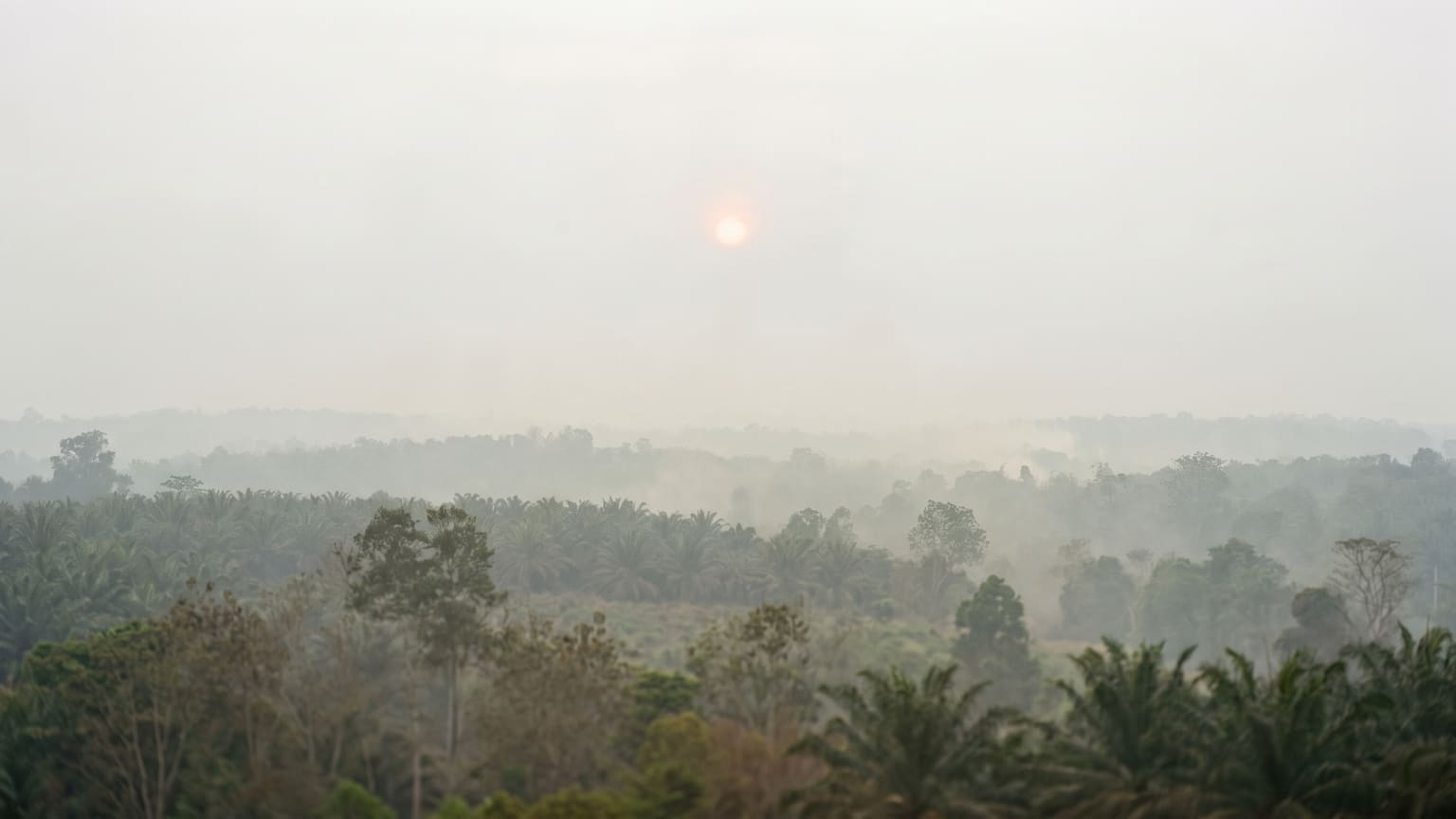
Haze is not new. Almost every major episode has come from the same place: land and peat fires in Sumatra and Kalimantan, carried by the southwest monsoon between June and October. El Niño years, when the dry season runs longer and drier, are usually the worst. 1997 and 2015 were both El Niño years.
| Year | Highest reading | Emergency | Schools |
|---|---|---|---|
| 1997 | Kuching, about 839 (23 Sep) | Sarawak, 19 to 28 Sep | Closed across Sarawak |
| 2005 | Port Klang 424 (10 Aug), above 500 the next day | Port Klang and Kuala Selangor, 11 to 13 Aug | Closed in the emergency areas |
| 2013 | Muar 746 (23 Jun) | Muar and Ledang, 23 to 25 Jun | Over 600 in Johor, plus KL, Selangor and Melaka |
| 2015 | Shah Alam 308 (4 Oct) | None | 4,778 schools, nearly 2.7 million pupils (22 Oct) |
| 2019 | Miri 442 (22 Aug) | None | 2,459 schools, 1.73 million pupils (18 Sep) |
| 2026 | Serian 374 (1 Sep) | Serian Division, from 4 Sep | 647 in Sarawak (7 to 11 Sep); October in the Peninsula |
1997: the worst on record
On 23 September 1997, Kuching read about 839, the highest API ever recorded in Malaysia. An emergency was declared in Sarawak when the API passed 500 on 19 September, and lifted on 28 September. Schools, offices and factories were shut throughout. An EEPSEA and WWF study put the combined losses of Malaysia and Singapore at about US$0.4 billion, a figure its own authors call a lower bound.
2005 and 2013: emergencies in Selangor and Johor
In August 2005, smoke from Sumatra hit the Selangor coast fast. Port Klang read 424 and Kuala Selangor 418 on 10 August, and an emergency was declared for both areas the next day. Schools, government offices and the port were closed until 13 August.
In June 2013, smoke from Riau took Muar to 746 on the morning of 23 June. An emergency was declared in Muar and Ledang the same day and lifted on 25 June. More than 600 schools in Johor closed, followed by schools in KL, Selangor and Melaka. Johor reported at least a 21% rise in upper respiratory illness.
2015 and 2019: closures on a national scale
The 2015 episode ran from late June to the end of October. Its peaks were lower than 1997 or 2013, but the haze covered much of the country for a long time. By 22 October, 4,778 schools and nearly 2.7 million pupils were affected, and the Kuala Lumpur Marathon was cancelled. A Harvard and Columbia study estimated more than 100,000 early deaths across the region, most of them in Indonesia. Malaysian, Indonesian and Singaporean health authorities disputed the figure.
In 2019, the highest reading came from local peat fires at Kuala Baram, which took Miri to 442 on 22 August. In September, the Ministry of Education set the rule of closing schools above API 200 and stopping outdoor activities above 100. At the peak, 2,459 schools were closed. No emergency was declared.
2026: the current episode
In early September 2026, smoke from Kalimantan took Serian to 374, Kuching to 346 and Sarikei to 333. An emergency was declared across Serian Division on 4 September, and 647 schools in Sarawak closed from 7 to 11 September. In October the haze moved to the Peninsula, and schools closed in Selangor, Putrajaya, Rompin district and several other states. The readings on this site update every hour throughout.
Comparing old and new numbers
Take care comparing readings across decades. The API has always been a 24-hour moving average, not a spot reading. But in 2013 it was published only three times a day, and PM2.5 was added to the calculation only some years later. The 1997 and 2013 readings were worked out from PM10 alone, so today's numbers and the old ones are not measured in quite the same way.
The ASEAN agreement
The ASEAN Agreement on Transboundary Haze Pollution was signed in Kuala Lumpur on 10 June 2002 and came into force on 25 November 2003. Malaysia ratified it in 2002. Indonesia was the last member state to do so, in 2014. The agreement commits members to cooperate and share information, but has no enforcement mechanism, and the haze keeps returning.
Sources: Bernama, The Star and Borneo Post reporting; the EEPSEA study (1997); records of the 2005, 2013, 2015 and 2019 episodes compiled from contemporary reports. School closure figures are totals on the date given, not across the whole episode.